Principles, film, photography
Motion and art direction
How a brand moves is part of how it sounds. We set the motion principles, then produce the launch films, loops and interface choreography.
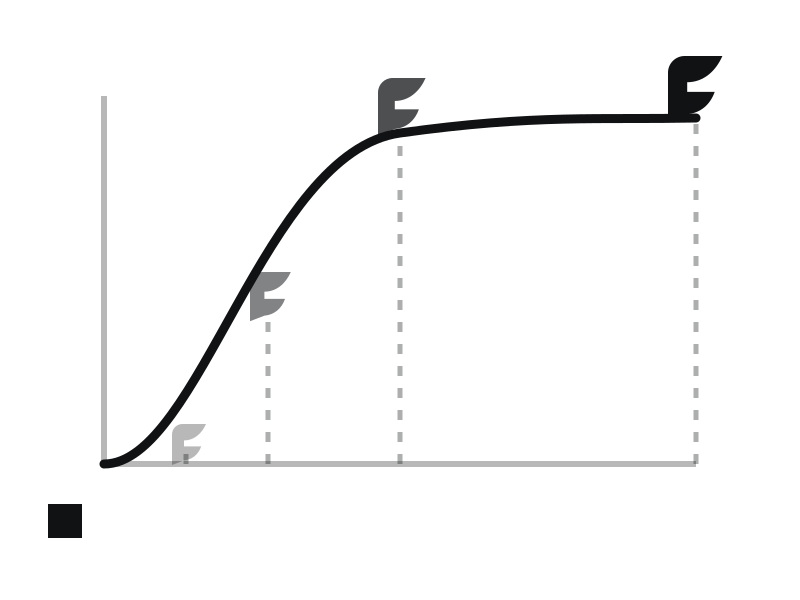
Motion is usually treated as decoration applied at the end, which is why so much of it feels arbitrary. Yet an interface that eases slowly and an interface that snaps say completely different things about the company behind them, in the same way a typeface does.
So we decide it deliberately. Which curve things travel on, how long a transition is allowed to take, what moves at all and what stays still — written down as principles rather than produced one animation at a time, so that the next person to build a screen has something to follow.
From there we produce the work itself: launch films, social loops, the choreography of an interface, and the art direction around photography so a set of images reads as one brand rather than a folder of nice pictures.
Every principle we set has an accessible counterpart. A visitor who has asked their system for reduced motion gets a version that still works and still looks intentional, rather than a page with the life switched off — that path is designed, not left to chance.
Questions we get asked
Do we need motion at all?
Not necessarily. If your brand lives mostly in print and on a simple site, motion principles are a cost without a return. It earns its place when there is an interface, a launch, or a social presence that has to look like one company.
What about people who find motion uncomfortable?
Every principle we set has an accessible counterpart. A visitor whose system asks for reduced motion gets a version that still works and still looks intentional — designed, not a page with the life switched off.
Can you work with our existing footage?
Usually. Art direction is as much about deciding what not to use as about shooting new material, and a set of existing images that has never been edited as a set is a common place to start.