Marks, type, guidelines
Visual identity systems
Logo, type, colour, grid and the rules that hold them together, delivered as a system your team can actually run.
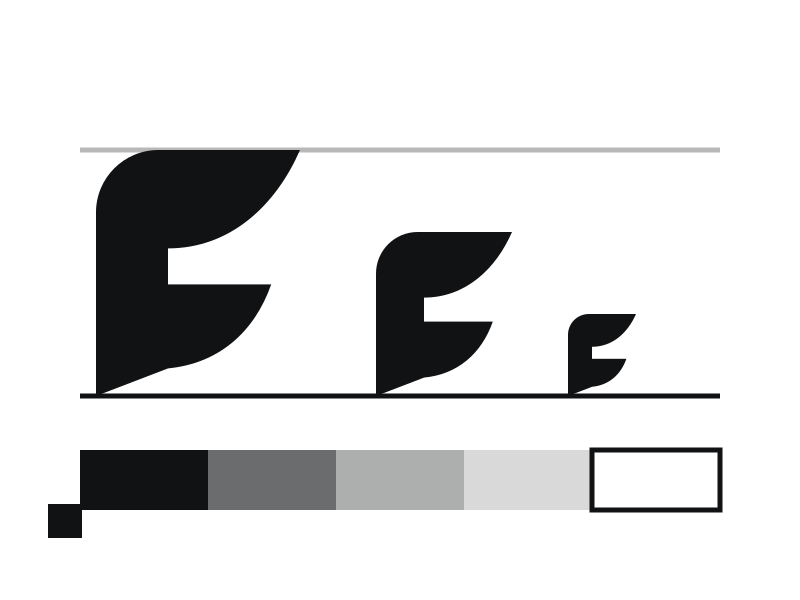
A logo on its own is not an identity. What decides whether a brand looks like itself six months later is everything around the mark: which typeface carries a headline, how much air sits around a photograph, what colour is allowed to be loud and what has to stay quiet.
So we design the system, not the artwork. That means a mark that survives being small, a typographic scale with a reason for each step, a palette with rules about proportion rather than a row of swatches, and layout principles somebody can apply to a page nobody designed for them.
It arrives as files your team can use without asking us — logo in every format that gets asked for, fonts licensed in your name, templates for the things you make most often, and guidelines written to be followed rather than admired. Short, specific, with the reasoning included so people can make good decisions in situations the document did not predict.
Where a website is part of the same project, identity and interface are designed together rather than in sequence. A palette chosen on paper and a palette that has to pass contrast requirements on screen are not always the same palette, and finding that out late is expensive.
Questions we get asked
Do we own the logo?
Yes, once the invoice is settled. The rights in the final approved deliverables transfer to you, for use anywhere and for as long as you like. Fonts are the exception everywhere in this industry — those are licensed, in your name, and we arrange it.
Can our own team keep making things afterwards?
That is the point of delivering a system rather than artwork. You get templates for what you make most often and guidelines written to be followed, with the reasoning included so people can decide well in situations the document did not predict.
How many logo options do we see?
One recommended route, developed properly, with the reasoning behind it. Three options exist to transfer the decision back to you, and the one that gets picked is usually the safest rather than the best.
What if we already have a logo we like?
Then we keep it and build the system around it. Plenty of identities fail on everything except the mark, and replacing a logo people already recognise is a cost worth avoiding unless there is a reason.